Showing posts with label United Mine Workers. Show all posts

Friday, August 23, 2024

Labor History: Sacco and Vanzetti, Coal Miners, A Strike, And You


The Italian anarchists Nicola Sacco and BartolomeoVanzetti were executed in Massachusetts on August 23, 1927 for a hold up and theft and for killing a guard and a paymaster, crimes that they most likely did not commit. The two men were arrested shortly after the hold up and murders and were first sentenced in July of 1921. Appeals and international protests and interventions by prominent politicians, public figures, and legal scholars followed. The defense had an answer for every argument made by the prosecution, and it was clear that the international protests supporting the two men had an effect on the judges and the prosecution and those they consulted with. Still, Sacco and Vanzetti were sentenced to death in April of 1927 and an advisory committee charged with reviewing aspects of the case by Massachusetts Governor Alvan T. Fuller let the verdict stand.

We tend to think of the 1920s as a time of social excesses, mass consumption or consumerism, jazz, flappers, and people flaunting Prohibition. What we do not learn, or what we overlook, is that the 1920s were also times of increasing exploitation of workers, racist and mean-spirited restrictions on immigration, violent outrages against people of color, political repression, and strike-breaking by employers and losses for many unions. Coal mining and steel-producing regions were living in depression conditions well before the stock market crash of 1929. The labor movement and the Left were both deeply divided, although there were moments during the 1920s when both movements showed remarkable creativity and sometimes united around common objectives. By the standards of today the international labor and Left movements were large and deeply rooted in working-class communities, but by the standards of the 1920s these movements were in crisis and were trying to find their bearings after the devastation of the First World War and the failed strike waves and repression that followed the war. Moreover, the generation that had founded the modern labor and Left movements in many countries---including the United States---was passing on and the new leaders of these movements had only known the conditions of intense class war, repression, a world war, and bitter anti-colonial and often failing democratic struggles. It was in this atmosphere that Italian and German fascism formed and that industrial production and consumerism in the United States were reconfigured in the United States. And it was in this environment that Sacco and Vanzetti were arrested, tried, and convicted. Innocent or guilty, the laws that prevail today would likely not have allowed either their convictions or their death sentences.

The cases of Sacco and Vanzetti might not be of great interest to working-class people in the United States today. What lessons could they hold for us after 97 years?

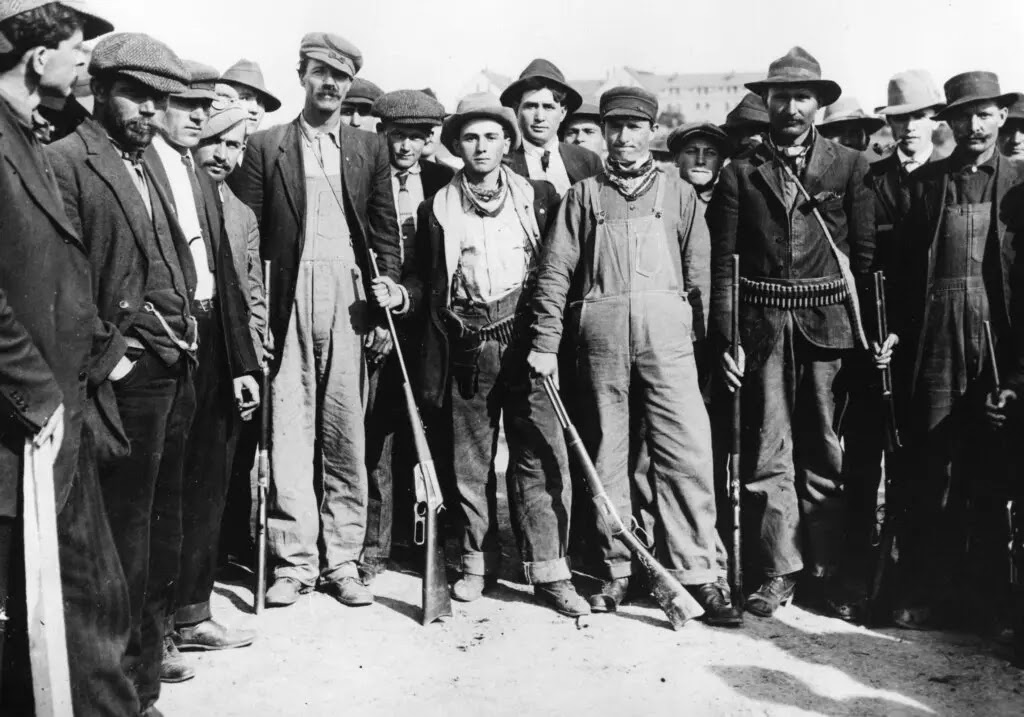
On August 8, 1927, the revolutionary Industrial Workersof the World (IWW) called a strike in Colorado’s southern coalfields to protest the executions of Sacco and Vanzetti. Those coalfields employed thousands of mine workers, most of them employed by the Rockefeller-owned Colorado Fuel & Iron Company. Memories of the Ludlow Massacre of 1914 that had taken place in those same southern Colorado coalfields were still fresh in the minds of people there. The IWW had seen better days and was suffering from internal divisions and isolation. Depression conditions were prevalent in the coalfields at the time. Employment in some mines was sporadic and the state had four or eight or more distinct coalfields that produced for different markets and worked under different conditions. Immigrants and immigrant communities were facing special attacks. The Ku Klux Klan was on the march as a mass organization and had infiltrated state and local law enforcement. A bloody regional conflict between rival gangs over bootlegging and car thefts was underway. CF&I seemed all-powerful. The United Mine Workers of America (UMWA) officially opposed the strike. 


And still the mine workers of southern Colorado struck.

Thousands of mine workers, most of them with roots in Italy or Mexico or Eastern Europe, walked out and stayed out for three days with the hope that their actions would help prevent the executions of Sacco and Vanzetti, two Italian anarchists being held on death row 2000 miles away, and lead to improvments in their working and living conditions as well.

There was no strike fund or strike pay.
There were no lawyers ready to help.
Most of the strikers were not affiliated with any union.
Many of the strikers could have been deported for having joined the strike.
All the strikers knew that they could be blacklisted.
One of the leading strike activists was a young woman named Milka Sablich, or "Flaming Milka," who was known for her red hair and wearing red to the picket lines on the prairies and for being especially tough.

The "Sacco and Vanzetti strike," as it was called, shut down all of the major mines in the southern Colorado coalfields.

Can you imagine this?

Milka Sablich

The mine workers returned after three days, reorganized, and struck again in September and October for a long list of union demands. The strike spread, and for the first time mine workers in all of Colorado’s coalfields struck together for a common set of demands.

The strike faced repression. A mineworker and a boy who was watching an IWW demonstration were killed in Walsenburg. Six striking mineworkers were killed at the Columbine Mine in northern Colorado. Union halls were raided and destroyed by the police and company thugs and vigilantes kidnapped strikers and transported them over state lines and left them in the middle of nowhere. The Governor of New Mexico ordered troops to the New Mexico-Colorado state line. The Catholic Bishop in Denver was said to have decreed that no member of the IWW could receive a Church funeral, although local clergy seem to have disregarded this. Strikers and strike supporters were held without charges and were moved from jail to jail. Homes were raided. Martial law conditions were imposed, although martial law was never declared, and these conditions were enforced by the Colorado National Guard and a state police unit that was reassigned from enforcing Prohibtion laws to strike-breaking. This special unit often acted with violence and was perhaps infiltrated by the Ku Klux Klan. Strikers and their supporters were blacklisted.


The IWW could not hold the strike together and state and company repression took a toll. The union was forced to the margins. The UMWA intervened and got a contract at the Rocky Mountain Fuel Company that shut the IWW out and gave the UMWA a base for future organizing. That contract and the UMWA’s later organizing helped bring some stability to the northern Colorado coal fields and helped steelworkers employed at the C&I-owned steel mill in Pueblo, Colorado to get a union contract years later. It also helped Josepine Roche, the progressive owner of Rocky Mountain Fuel, and her liberal cohort gain national attention and secured a place for her and some of those around her in President Roosevelt’s New Deal administration. She became a major force behind the New Deal coal codes and she later served as an administrator of the UMWA’s Welfare and Pension Fund.

The Columbine Mine was owned by Rocky Mountain Fuel. Roche and her closest advisors denied being responsible for the deaths of the six who died there and the sixty or so people who were wounded there on November 21, 1927. She managed to survive charges that she and the management team under her were responsible for the violence and other charges that she interfered and prevented the families of those killed from receiving settlements for the deaths of their loved ones. Roche was forced from her position as a Welfare and Pension Fund administrator in 1971 as militant mine workers and their families and allies fought for democratic control of the UMWA. To this day, I believe, there is no accurate account of Roche's relationship to the violence that occured at Columbine and its aftermath and her role as a Welfare and Pension Fund administrator and her removal from that position.  


The IWW’s great organizer Sam Embree was hounded out of the union in the aftermath of the strike. He later became an organizer for the International Union of Mine, Mill and Smelter Workers. But before the strike was over the IWW opened an organizing campaign among western agricultural workers that had limited success. The mine workers’ strike and the campaign among the agricultural workers became foundational to Colorado’s Chicano movement of the 1960s.

The strike ran, more or less, from September or October of 1927 to February or March of 1928. For a brief time after the strike, Colorado mine workers were the highest paid mine workers in the world. Mine owners forced the workers to surrender their wage gains once the IWW was gone and the UMWA was tied up with trying to make the contract at Rocky Mountain Fuel work. 

Many of the strike's leaders and participants went on to make lasting contributions in politics, the labor movement, the Chicano movement, and Depression-era social movement organizing. They passed on what they learned in 1927-1928 to others who carried these lessons well into the 1960s. And so it is, I think, that Sacco and Vanzetti have given us lasting legacies, however indirect or difficult to trace these are.

I have been documenting the 1927-1928 Colorado mine workers’ strike and the legacies left by the strike’s participants and organizers since 1982. In the meantime, Leigh Campbell-Hale has come out with a worthyintroduction to the strike and Michael Robert Gonzalez has written his dissertation on the strike and has offered us a special look into the radical and ethic-communal origins of the strike. The book Slaughter in Serene gives an account of the violence that occured at the Columbine mine.

My hope is that we will read working-class history to place ourselves in our own history as collective owners of our destinies.

Bartolomeo Vanzetti had in his possession a draft of a leaflet when he was arrested that may still resonate with many of us today. It read:

Workers, you have fought all the wars. You have worked for all the bosses. You have wandered over all the countries. Have you harvested the fruit of your labors, the price of your victories? Does the past comfort you? Does the present smile on you? Does the future promise you anything? Have you found a piece of land where you can live like a human being and die like a human being?

Thursday, August 22, 2024

HOLD LOGAN COUNTY, WV TO THEIR WORD: STAND UP FOR WORKERS RIGHTS!

 From the United Mine Workers of America:

Logan County Commissioners Office refuses to negotiate with the union and is choosing to spend TAXPAYER MONEY on union activities!

The workers have clearly expressed their need for union representation, a right that should be respected and upheld.

The UMWA contributes $35 million annually through retirees’ healthcare and pensions, playing a crucial role in Logan County’s local economy and the community.

We demand that you honor your commitment to the people who supported you and end all union-busting activities immediately. Recognize the UMWA and support the rights of Logan County workers to advocate for themselves. It is time to do what is right and just for the community you serve.


Wednesday, August 21, 2024

From The Front Lines


Workers hit the bricks at Cornell University in a historic strike.
The photo is from The Cornell Daily Sun.


A crowd of Cornell workers sing and chant as they march around
the university’s campus on Friday, August 16, days before the union called
 a strike. (Photo: Aaron Fernando) See this article in The Nation.


The workers have set up a petition for supporters to sign.
Please do so at cwa.org/attse-support.


UNITED MINE WORKERS OF AMERICA PRESIDENT
ROBERTS SPEAKS AT A PRESS CONFERENCE FOR
THE PROPOSED SILICA RULE AT UMWA’S DISTRICT 2
OFFICE IN UNIONTOWN, PENNSYLVANIA.
Photo Credit: Department of Labor
Shawn T Moore

New Silica Rule Funding Challenged---
A DIRECT ATTACK ON THE HEALTH AND SAFETY OF COAL MINERS

The U.S. House Appropriations committee voted on July 10, along party lines, to advance a bill that would defund the Department of Labor’s efforts to enforce the new silica rule. The bill, which directs funding for the DOL and MSHA, explicitly states that no money can be used to enforce the silica rule limiting allowable levels of silica dust in mines.

Republican-controlled U.S. House Appropriations Committee approved the fiscal year 2025 funding bill in a 31-25 vote, setting up a vote on the appropriations package by the full House.

“This is an insult to the coal miners who have risked their lives and their long-term health to power our factories and heat our homes,“ said Senator Bob Casey (D-PA). “I am going to make damn sure we continue this funding so that we may keep our promise to miners suffering from black lung disease.

“MSHA’s silica standard was put into place to reduce the amount of deadly silica dust in mine atmospheres, which is crucial for combating the worsening epidemic of black lung disease. It is difficult to understand how certain members of Congress could possibly be supportive of more miners dying a suffocating death as a result of being forced to breathe silica dust,” said President Roberts.

“The actions of those in Congress who support defunding for the new silica rule is a direct attack on the health and safety of coal miners,” Roberts said. “The epidemic of black lung disease is a critical issue that demands immediate action. The union urges all members of Congress to reject this dangerous provision and stand up for the health and safety of our nation’s coal miners.”

“Miners with black lung disease have been fighting for protections from deadly silica dust for decades. The union is grateful MSHA finally took action formulating the new silica standard,” said Secretary-Treasurer Sanson.

“It is disturbing, to say the least, that a handful of politicians, who are supposed to be for the people, have taken actions that are a slap in the face to every coal miner in our nation,” Sanson said. “If this policy becomes law, it will put thousands of miners at even greater risk. Congress needs to do better, and our miners deserve better.”

Wednesday, August 7, 2024

Karen Baker Shows A Hidden Truth Of Appalachia


Karen Baker is running for Congress as a Democrat in Virginia's 9th Congressional District. Her campaign is highlighting her having been a lawyer, judge, and nurse and her support for rural families. She also says on her Facebook page that "I am unequivocally Pro-Labor and I support the Pro-Act. Unions are historically, the culture hearth of America's middle class and can and should be again. " 

By anyone's measure Sister Baker has had a difficult working-class life, and she has struggled for all that she has achieved. She now has a multiracial and multigenerational coalition behind her that includes the United Mine Workers of America (UMWA). Sister Baker is an Associate Member of the UMWA.

The UMWA recently sponsored a "Unite The Ninth Union Rally" in Castlewood, VA.---Coal Country---and Sister Baker addressed the gathering and had a good time doing it. One union statement read "Baker’s background as an associate member of the UMWA and her involvement in advocacy work against the Moss 3 Landfill in Russell County demonstrates her deep connection to the coalfields region and her commitment to environmental and labor issues.”

There are indeed progressive voices in Appalachia and coalitions that unite diverse constituencies, inluding labor and working-class people. Don't let the Republicans fool you into believing otherwise. 

Photos from the United Mine Workers of America.

Monday, July 15, 2024

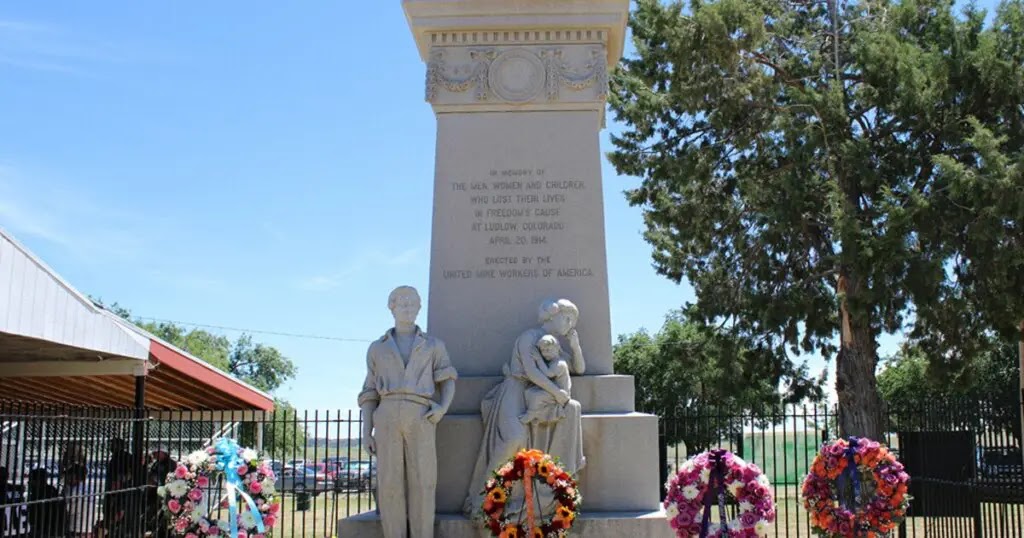
National Park Service awards grant to preserve Ludlow Massacre site

From the United Mine Workers of America, KXRM Colorado Springs. and Bob Rossi:


(TRINIDAD, Colo.) — The National Park Service (NPS) announced on Wednesday, July 10 awarded grants to eight recipients to help preserve battlefields and other sites of armed conflict, including the site of the Ludlow Massacre in Las Animas County.

“The diverse grant opportunities provided through the American Battlefield Protection Program help our preservation partners study and protect almost 400 years of conflict history,” said National Park Service Director Chuck Sams. “By supporting these localized efforts, all Americans gain the opportunity to learn from these conflicts and understand their impact on the foundation and growth of this country.”

According to NPS, one of the projects funded will support the development of a comprehensive preservation and interpretation plan for the Ludlow Tent Colony Site, where an armed conflict occurred between the United Mine Workers of America and the Colorado National Guard, known as the Colorado Coalfield War, or the “War of 1914.” This was one of many such conflicts at the time that took place in coal and other mining fields in the United States, Mexico, and Canada. The Ludlow Massacre of April 20, 1914 took the lives of at least 21 people, including women and children who were living in the Ludlow union Tent Colony after having been evicted from company-owned coal camps. The Tent Colony was one of many such worker refuges at the time. It is a must-see for union members and their families who visit Colorado.

The strikes that became the Colorado Coalfield War began in 1910, although it can be said that Coloado coal mine workers frequently engaged in strikes from the time that the state's coalfields began to open in the later decades of the 19th century to the early 1930s. For much of this time the mine workers were employed in competing coalfields and the Colorado Fuel & Iron Company (CF&I), most often associated with the Rockefeller interests in popular memory, and the railroads held a great advantage over the workers and their families and communities.

It was difficult to achieve unity between the mine workers, and the union hesitated to call a statewide strike in the 1910-1914 years. Colorado's coal mining communities spoke scores of languages and were quite diverse, even though forms of racial and ethnic segregation were in place. Different, and sometimes competing, microeconomies existed within the state's coalfields, and it was not always easy for mine workers and their communities to understand that mine workers had common interests despite the competitive arrangements that they had been forced into. Turnover was high, there was often competition for jobs, the companies controlled the police and the courts and exercised great influence over state politics, and company stores ripped off workers. Large numbers of mine workers and their families engaged in seasonal agricultural labor, ranching, and railroad work when the mines were not working. The 1910-1914 strikes and the drama and violence of those strikes reflected a deep and abiding anger among working-class people and a nearly-desperate attempt by those in power to continue on with semi-feudal economic and political relations.         


On April 20, 1914, National Guardsmen and gun thugs aligned with the Colorado Fuel & Iron Company attacked the Ludlow Tent Colony. The day fell on Greek Easter and workers at the Tent Colony were playing baseball. Louis Tikas, a popular leader of the mine worker insurgency in Southern Colorado, was brutally mudered by gun thugs when he sought to negotiate a truce. Most of those who died that day were suffocated or were burned to death as they sought shelter from the gunfire directed at them by the company gun thugs and National Guardsmen and as their tents caught fire and they were trapped in dugouts under their tents that they had used for safety and for storing their belongings. One of the dugouts survives at the Ludlow Memorial can can be seen by visitors.  

That terrible event provoked at least 10 days of continuous warfare in Colorado, with mine workers and their allies using sophisticated military maneuvers. President Woodrow Wilson ordered federal troops to disarm both sides and restore order. Mass blacklisting took place. The union was able to maintain a base in the Northern Colordo coalfields and a skeletal underground structure in the centeral and Southern coalfields, and unionism survived among some key workers at the huge CF&I steel mill and rail system in Pueblo.

The mine workers and steel workers continued to press for unionization and carried out important strikes in the aftermath of the First World War, despite facing heavy repression. The first coordinated statewide coal mine workers strike in Colorado occured in 1927 and 1928, when mine workers struck under the leadership of the Industrial Workers of the World (IWW) and then became for a short time the highest paid coal mine workers in the world. The IWW was defeated, again through violence and blacklisting and company-dominated courts, and the United Mine Workers of America gained a foothold. The UMWA eventually came to represent Colorao's mine workers.

The UMWA was awarded $151,976.15 for the project.


Thursday, July 11, 2024

Republicans Are Killing Life Saving Mine Regulations

 From The Valley Labor Report:

Start at around 1:07 to hear the report on he miners.

A seperate report from the United Mine Workers of America (UMWA) included the following comments from Union President Cecil Roberts and some needed context:

“What does this rule do?”, said President Roberts. “It’s not overly complicated. More people will be alive 10 years from now if it wasn’t for what we’ve done fighting for this rule. All we have been fighting for decades now is to try and save people’s lives.”

“Young miners in their 30’s and 40’s are getting lung diseases that are being exacerbated by silica dust. What was thought to be a disease of the past is coming back with a vengeance because miners are cutting more rock than ever before. This is a critical step to keeping miners safe and healthy. Now, our focus shifts to holding mining operators accountable. The UMWA remains steadfast in our efforts to ensure strict adherence to the new legislation within the industry.“This is a critical step to keeping miners safe and healthy, not just day to day, but for their full lifetime. This is a good day for miners. Workers in other industries have long been protected from excessive exposure to silica dust, but miners were not, even though they work in an environment where silica dust is encountered daily. It was a travesty that the government had never taken steps to protect them, but now it finally has,” Roberts said.

MSHA’s final rule will improve the health and safety of U.S. miners significantly. The rule will result in an estimated total of 1,067 lifetime avoided deaths and 3,746 lifetime avoided cases of silica-related illnesses. The rule will take effect for coal mines in April, 2025 and for metal and nonmetal mines in April, 2026, in order to ensure operators have the tools to implement it correctly.


Photo from In These Times

Labor journalist Kim Kelly has a good article in In These Times under today's date under the headline 
"Republicans Just Handed Down a Death Sentence to the Nation's Coal Miners." She says

It’s clear that the Republican committee members are determined to slash and burn away whatever ​“excesses” they can find, and nowhere is that more apparent than in their disgusting betrayal of the coal miners their party loves so dearly to pretend to respect. Section 123 of the bill reads, ​“None of the funds made available by this Act may be used to administer, implement, or enforce the proposed rule entitled ​‘Lowering Miners’ Exposure to Respirable Crystalline Silica and Improving Respiratory Protection,’ published by the Department of Labor in the Federal Register on April 18, 2024.” The language is bloodless, but the intent is utterly vicious: These highly paid, pampered modern aristocrats sat back in their padded chairs and casually handed down a potential death sentence to 44,000 people.

That’s how many coal miners currently work in the U.S. as of June 2024. One in 5 of those miners — those who have spent more than 20 years underground — is suffering from coal miner’s pneumoconiosis, the dreadful degenerative lung disease known more colloquially as black lung. As I reported in my 2023 In These Times investigation, ​“The Young Miners Dying of ​‘An Old Man’s Disease,’ ” the biggest direct cause of that spike in cases is silica dust. Coal miners across Central Appalachia are being overexposed to the toxic substance as they work underground, and it has been wreaking havoc upon their lungs and lives. While Rep. Aderholt has been enjoying his cushy office on Capitol Hill, they’ve been breathing in death.

Thursday, June 6, 2024

Urgent Solidarity Request: The United Mine Workers of America Needs Our Solidarity Now

The Monongalia County, West Virginia Courthouse and County building.


The United Mine Workers of America is seeking to organize and represent workers employed by Monongalia County in West Virginia. The County Commission Office is resisting the Union. The Union has the support of the workers involved. One of the problems here is that the Commission Office is attempting to portray the Union as an outside force, but the UMWA has long-standing and vital links to the region and has had a base in Monongalia County for most of the Union's existence. Please help by going here and lending a hand.   

Despite workers expressing their support for joining the UMWA, the Commission Office is obstructing the unionization process. Mon County states they will allow their employees to vote but they have said they disagree with having an “intervening third party” representing their employees. So, our question is…

WILL THEY RESPECT THE PROCESS?
and
WILL THEY RESPECT THE RESULT?

Monongalia County Commissioners need to take the following steps:

1. Review the Resolution that has been submitted by the United Mine Workers of America.

2. Come to a workshop with the Union to discuss the Resolution before adoption.

3. Adopt the Labor Resolution in question.

4. Adhere to the vote of the Employees of Monongalia County addressing the right to Unionize.


Wednesday, April 17, 2024

Another union victory: We have a new Silica Dust Exposure Rule!


FOR IMMEDIATE RELEASE

APRIL 16, 2024

United Mine Workers of America Hosts Department of Labor Silica Rule Kickoff Event

[TRIANGLE, VA] – The United Mine Workers of America (UMWA) hosted a Department of Labor Silica Rule Kickoff Event to celebrate the finalization of the new Silica Dust Exposure Rule. The event aimed to raise awareness about the importance of the rule in protecting the health and safety of miners across the nation.

Speaking at the event were UMWA International President Cecil E. Roberts, Acting Secretary of Labor Julie Su, Assistant Secretary of the Mine Health and Safety Administration Chris Williamson, NIOSH Director of Respiratory Health Division David Weissman, President of the Black Lung Association Gary Harrison, as well as members of the United Mine Workers of America and United Steelworkers.

The new silica rule significantly reduces respirable crystalline silica exposures and improves the early detection of related diseases. It also includes updates to the respiratory protection standard, ensuring that miners are adequately protected from the harmful effects of silica dust.

“The UMWA has been advocating for this rule for many years, so we are glad that the Agency has created a rule to address the rise in silica-related lung diseases in our nation’s miners (both coal and metal non-metal),” said Roberts. “Young miners in their 30s and 40s are getting lung diseases that are being exacerbated by silica dust. What was thought to be a disease of the past is coming back with a vengeance because miners are cutting more rock than ever before.

“This is a critical step to keeping miners safe and healthy not just day to day, but for their full lifetime,” Roberts said. “Now, our focus shifts to holding mining companies accountable. Together with our labor partners, UMWA remains steadfast in our efforts to ensure strict adherence to the new legislation within the industry.”


AFL-CIO President Liz Shuler Applauds Critical Protections for Mine Workers from Deadly Silica Exposure

“In a definitive step toward safeguarding the health and well-being of our nation’s miners, we applaud President Biden for issuing a final rule to protect coal and metal and non-metal miners….Today’s final rule is another victory in the century-long battle against silica in the workplace, which affects working people across industries….

“We extend our deepest appreciation to acting Labor Secretary Julie Su for her resolute leadership, recognizing the urgent need to provide mine workers with lifesaving protections.”

Read the full statement from AFL-CIO President Liz Shuler here.

Sunday, February 18, 2024

Solidarity needed now, a few learning opportunities, and some quick labor news


CWA President Claude Cummings Jr. delivered the keynote address
at the University of Michigan’s Black Men in Unions Conference.


Teamsters Local 223 & Eugene/Springfield Solidarity Network
stands in solidarity with Oregon Nurses Association! Photo from Tizoc
Arenas.


From a press release signed by Johnny Earl, SEIU 503 Higher Ed Bargaining Team Chair and
Custodial Coordinator, University of Oregon:

Here are some more ways you can help:

1. Send an email to the University Presidents asking them to settle a fair contract with classified workers and to tell management’s bargaining team to stop their hardball tactics at the negotiating table. (Click here for a list of the president’s email addresses.) If you have questions, please ask Len Norwitz at norwitzL@seiu503.org.

2. Attend one of the action the list below next week. If you can attend any of these, we would love to have your support. Please wear purple if you can, but if you can’t we’d still love to see you there. To RSVP or to get more information, email Len Norwitz at norwitzl@seiu503.org.

Come to Western Oregon University (Monmouth) on Thursday, February 22nd, from 11 am to 1 pm to help distribute flyers and have conversations with the campus community and students. And participate as we deliver our support petitions. Get oriented/meet at the Werner University Center on North Monmouth Ave.

Come to Portland State University (Portland) Smith Memorial Student Union on Wednesday, February 21st, from 9:30 to 11:30 am for an open campus strategic planning session hosted by President Ann Cudd.

Come to Oregon State University (Corvallis) McNary Dining Center on Friday, February 23rd, from 11 to 11:30 am and be a part of our delegation – “OSU cannot ignore us!” - to the Annual UHDS Soup-Challenge event that is open to the community.

Come to the University of Oregon (Eugene) EU Ampitheatre on Monday, February 26th, from noon to 1 pm and be a part of the gathering and delegation to the President’s office - “We will not be ignored”.

Southern Oregon University (Ashland) - 2/26 – Event info TBD

Oregon Institute of Technology (Klamath Falls) - 2/26 – Event info TBD

Eastern Oregon University (La Grande) - 2/26 – Event info TBD

We appreciate your continued support for our Higher Ed members and thank you in advance for seeing this through to a fair contract.


From Portland Jobs with Justice:

On Monday, the editorial staff of the Portland Mercury, The Stranger, EverOut Portland, Bold Type Tickets and across Index Media have announced they have joined together to form the Index Media Union, as members of the Pacific NW Newspaper Guild! JWJ was thrilled to hear about this new union at our most recent Steering Committee meeting, as all workers deserve a union! We strongly urge management at Index Media to voluntarily recognize the union in order to proceed swiftly to negotiating a fair first contract! You can find JWJ's letter of support, here!

Share their announcements over Instagram and Twitter, and give them a follow, too!


Please join the Oregon Coalition of Black Trade Unionists, JWJ's Portland Rising, and the SEIU-AFRAM Caucus for a special Black History Month Movie night! It will feature two short films and a special presentation moderated by Vinnie Blanco Jr.:

Travis Nelson, Representative, House District 44 will talk on health care inequities and efforts to create a new health care system, and

Sarina Roher, Secretary-Treasurer, Oregon AFL-CIO will talk on bargaining challenges for health care unions and the challenges of being a health care worker.

Thursday, February 29 from 7 - 9pm
SEIU Local 503 (525 NE Oregon St Portland OR 97232)
Masks encouraged!Join Coalition of Black Trade Unionists for great Black History Month programming all month, including the 2/15 Health Forum (on Zoom.) Find more at this link!


All of the members of the Georgia State Senate Democratic Caucus wore red bandanas last week in solidarity with CWA members who are leading the fight against an anti-union bill. The bill would make companies that respect their workers’ right to form unions through voluntary recognition ineligible for state economic incentives. (Photo and text from CWA)

My heart was troubled to learn this morning that Remington Arms is moving from New York to Georgia and that our United Mine Workers of America will be losing about 300 members as this move takes place. Perhaps Remington workers will go union in Georgia. 


Wednesday, February 7, 2024

AFSCME is asking for your help!


AFSCME is asking for your help!


The United Mine Workers is supporting AFSCME by voting for their "I Am Story" limited series podcast at this year's NAACP Image Awards.

The 1968 Memphis sanitation strike is a powerful example of the change working people can make through collective action. Thirteen hundred African American sanitation workers, represented by AFSCME Local 1733, put everything on the line for dignity and respect, marching with signs that declared their humanity with the slogan, “I AM A MAN.” It is one of American history’s most compelling fights for labor rights and civil rights.

Last year, to mark the 55th anniversary of the strike, AFSCME President Lee Saunders produced a five-episode podcast called “I AM Story” that introduced a new generation of activists to this iconic struggle. The podcast has now been nominated for an NAACP Image Award in the Outstanding Podcast – Limited Series/Short Form category, and we can vote to determine the winner.

VOTING IS EASY!

1. Click on this link.

2. Click on the “Outstanding Podcast – Limited Series/Short Form” category under the “Recording” header.

3. Click the “Vote” button located underneath the “I AM Story” podcast—please note that this does not officially count your vote!

4. You must click “Back to Categories,” which will return you to the original page.

5. Finally, scroll to the bottom of the categories page and click the “Submit Your Votes” button.

6. Enter your email into the pop-up window, and once it says, “Vote received,” your vote has officially been counted.

At a moment when issues of racial and economic justice are again front and center, it is more important than ever that we honor the Memphis strikers, raising their profile and telling their remarkable story.

Thank you so much for helping us carry on the legacy of the Memphis sanitation strike. Our union siblings at AFSCME, the strikers, and their families appreciate your vote.

In Solidarity,

UMWA Activist Team

Thursday, January 25, 2024

Today In Union History: The Founding Of The United Mine Workers Of America & A Short Labor History Lesson


The United Mine Workers of America (UMWA) was founded in Columbus, Ohio on January 25, 1890. Two days after the union was founded the union's convention voted to create what I believe was the first union strike defense fund paid for by assessing union members' wages in the United States. The founding of the UMWA and the creation of that fund marked a turning point in labor and industrial relations in the United States.

Mine workers had tried many different kinds of labor and union organizations by 1890. There had been sick and death benefit funds and lodges, unions restricted to skilled miners, ethically-based organizations, and local organizations that had been secretive and that sometimes engaged in violence. All of these had failed, most often because employers had the upper hand and could divide the workers and use repressive and violent strategies. There were also the problems of local and regional unions calling strikes prematurely or on their own, an absence of unity and an absence of a shared sense of obligation among mine workers, and the introduction of new ways of getting out coal and getting it to markets that challenged the forms of workers' control in and around the mines that mine workers refused to concede on. Coal markets were changing, mining technology was changing, methods of work were changing, mining was becoming more hazardous, and new immigrants who did not speak English as their first language and who had traditions of their own were entering the mines. In almost every coalfield in the United States what happened in the mines was joined to what happened in the communities aboveground, giving a unique shape to mine worker consciousness and mine union organizing.

The parents of the UMWA---the National Progressive Union of Miners and Mine Laborers and the Knights of Labor Trade Assembly No. 135---had been able to rely on autonomous and secretive local organizations. Early union-employer bargaining in the key Ohio-Illinois-Pennsylvania-Indiana mining districts was carried on with union delegates and coal operators assembling and setting wages and working conditions with what their markets could bear first and foremost in their minds. Miners struck, or refrained from working, in order to create scarcities of coal and increases in coal tonnage market prices and returned to work when prices rose. This helped the operators and the industry, such as they were. But by 1890 this was becoming, or had become, ineffectual. The important anthracite coal industry in northeastern Pennsylvania operated under different conditions, and the push by coal operators into Appalachia and the south and the rise of coal mining in the lower Midwestern and western states threatened stability where the union had its base. The operators who had previously cooperated with the labor organizations were no longer willing or able to do so. Local autonomous organizations could not meet these changing times. The old ideas of uplifting union miners on the basis of their skills, high wages and the contributions they made to their communities as citizens were necessarily giving way to forming a union that included all mine workers, regardless of citizenship or skill levels or racial or ethnic considerations, centralizing union bargaining power and strike coordination, maintaining national strike and defense funds, and forcing the coal industry to regulate itself.

Since the UMWA's founding the union has struggled with an industry that resists both voluntary and imposed regulation, even when that resistance costs lives, resources, money, and long-term industrial survival. The 19th century mine worker traditions of local union autonomy and action, even when these sometimes undermine regional or national solidarity, have never completely disappeared, either. Behind these mine worker traditions stand other traditions, also still somewhat in place, of worker control in the mines and community involvement in mine worker unionism. The UMWA has had to operate within these divergent and conflicting traditions. Employer and state violence and repression followed the union's early and most determined efforts to win justice in the coalfields, and union members and their supporters have responded as well with dramatic and defensive actions that often aroused the conscience of people of good will and eventually won progress. The Ludlow Massacre, the Lattimer Massacre, and the West Virginia Mine Wars were perhaps the most dramatic events that forced the union to toughen up and to often take a hard line in organizing, but these events came with the times in which they occurred. Dramatic struggles resurfaced in the coalfields in the 1960s and 1970s, in the mid- and late-1980s, the early 1990s, and most recently in 2021-2023 with the Warrior Met Coal strike in Alabama. The Warrior Met Coal strike was Alabama's longest strike.

A legacy of fighting back exists in the UMWA, and a shared and certain knowledge of the human costs of working non-union holds on as well. The union's presence in the coalfields has made the difference between life and death in the mines.

Boys working in Pennsylvania's anthracite mines 


Some of the 500-plus dead in the Monongah mine disaster of 1907


Strikers and their families in Ludlow, Colorado


The UMWA reached for an all-encompassing industrial unionism and became the foundation of modern mainstream industrial unionism. The union built strong relations of solidarity between Chicano and Mexican and Mexican American mine workers, Black mine workers, and white mine workers in most of the union's districts, but anti-Asian and anti-Chinese racism among mine workers limited the union's anti-racism. Other industrial unions that the UMWA helped birth went further. The UMWA led the fight against black lung disease, but with the recent loss of union density in mining black lung is making a terrible comeback. The union pioneered in institutionalizing healthcare in Appalachia, and in union pension and health and welfare programs nationally, but coal industry economics and some stubborn and corrupt corporations and politicians---and, regrettably, some corrupt union officials and staff---have done much damage to these programs.

Has the UMWA failed? No, not at all. That a small group of miners coalesced behind a shared and optimistic vision of effective industrial unionism in 1890 and built a union that has lasted 134 years is in itself a tremendous victory. The UMWA has withstood repression and violence brought against it by hostile employers and anti-union politicians. The union went through a particularly tough period following the First World War, a period that saw the UMWA nearly dissolved as internal factionalism and widespread unemployment in the coalfields and anti-union court rulings and legislation took a hard toll, but rebounded to lead the labor upsurge of the 1930s. It was at that point of crisis after the First World War that John L. Lewis took control of the UMWA, and his presence and leadership defined much of the labor movement into the late 1950s. To this day there are mine workers and others in coalfield communities who hold his memory dear.

Internal corruption wounded the union in the late 1940s and 1950s, but the mine workers and their allies who fought for mine safety, black lung prevention and benefits, pension rights and union democracy supported the Miners for Democracy campaign and a widespread strike movement that brought Arnold Miller to the presidency of the UMWA. Miller's election and the movement around him represented a great advance for labor. The election of Rich Trumka to the presidency of the UMWA in 1982 (and later to leadership in the AFL-CIO), the A.T. Massey strike (1984-1985), and the Pittston coal strike (April 5, 1989 to February 20, 1990) also opened new possibilities for labor in the United States. Women miners and mineworkers fought their way into the industry, found a home in the UMWA, and as union members opened the doors for other working women. Their work is still being celebrated. Improvements in mine safety are due almost entirely to the UMWA's work.

The UMWA has been built from the mine workers and the foundations of the union are in the coalfields, but the union represents many occupations that are unrelated to mining. If you are not a union member, and if you and your coworkers want a union, consider the UMWA. There is also an Associate Member program for friends of the UMWA that builds solidarity and provides some great benefits.  

The UMWA has not failed. The best is yet to come.

Cecil Roberts, President of the UMWA
                            

Tuesday, January 2, 2024

Improving Health and Safety for Modern Miners a Priority for UMWA


United Mine Workers of America (UMWA) International President, Cecil E. Roberts joined America’s Work Force Union Podcast and discussed the Warrior Met Strike in Alabama, outdated protective equipment for miners, and the dangers of silica dust.

Roberts began by detailing the two-year Warrior Met Strike in Alabama. He said the coal company was the target of many protests because management did not try to negotiate for a Collective Bargaining Agreement. Roberts called the company anti-union and discussed why the miners were forced to return to work. He noted the UMWA invested about $35 million into the strike. Once the company succeeded in getting individuals back to work, Warrior Met unsuccessfully attempted to dismantle the union. This plan ended up backfiring on the employers who claimed no involvement, Roberts said.

Roberts then spoke about silica dust, which has affected a large number of young miners, who have developed “black lung disease.” He explained how the dust is created by equipment that cuts through rock and puts silica dust into the air, which is then inhaled by the miners. When the dust is inhaled for an extended period through outdated safety equipment, workers get sick. He noted the only cure for “black lung” is a lung transplant. Sadly, he added that Congress has blocked the implementation of a new silica dust rule.

Finally, Roberts discussed the use of outdated protective equipment. He explained how the masks that miners wear put them at risk of suffocation and death due to multiple breathing hazards. Roberts urged the public to fight against a Congressional plan to end needed safety funding and introduce new bills to implement better health and safety measures for miners. The industry is in a decline because workers die from a disease they contract at the workplace, Roberts said. He added that coal companies need to make sure workers are not allowed to enter an area until silica dust is at safe levels.

For more updates on the UMWA and President Roberts, listen to the episode here.


America’s Work Force is the only daily labor podcast in the US and has been on the air since 1993, supplying listeners with useful, relevant input into their daily lives through fact-finding features, in-depth interviews, informative news segments, and practical consumer reports. America’s Work Force is committed to providing an accessible venue in which America’s workers and their families can hear discussions on important, relevant topics such as employment, healthcare, legislative action, labor-management relations, corporate practices, finances, local and national politics, consumer reports, and labor issues.

America’s Work Force Union Podcast is brought to you in part by our sponsors: American Federation of Government Employees, American Federation of Musicians Local 4, Columbus/Central Ohio Building and Construction Trades Council, Communication Workers of America, International Association of Heat and Frost Insulators and Allied Workers, International Union of Painters and Allied Trades District Council 6, The Labor Citizen newspaper, Laborers International Union of North America, North Coast Area Labor Federation, Survey and Ballot Systems, United Auto Workers, United Labor Agency, United Steelworkers.

The main text of this post came directly from a press release issued by the UMWA. I added several links.