Showing posts with label Working-class. Show all posts

Wednesday, June 26, 2024

Co-enforcement, Worker Power, and Re-thinking Labor and Social Movements (Part One)


This post is inspired by a plenary session and a workshop that I attended at the Labor Research and Action Network (LRAN) conference that was held in Portland on June 20-21.

The plenary session took up the matter of how labor can use co-enforcement strategies in Oregon. That session featured the following presenters and presentations:

• Jessica Giannettino Villatoro, Deputy Commissioner, Oregon Bureau of Labor and Industries (BOLI)
• Why the Agency Embraced Co-Enforcement, Big Changes: Laura van Enckevort, Wage and Hour Division Administrator, OR BOLI
• Transforming Day to Day Practices, Setting Sectoral Tables: Kate Suisman, Attorney, Northwest Workers' Justice Project and Liz Marquez, Policy Associate, Pineros y Campesinos Unidos del Noroeste (PCUN)

• Co-enforcement in Practice:

- Adam Jeffries, Proactive Investigations and Enforcement Unit, OR BOLI
- Construction: Trampas Simmons, Special Representative and Jesus Saucedo, Organizer, Western States Regional Council of Carpenters, taking on multiple subcontracting entities
- Childcare: Nat Glitsch, Organizer, ILWU Local 5 organizing in childcare centers

Progress, Challenges and Lessons:

• Moderator: Janice Fine, Professor, Rutgers University School of Management and Labor Relations

The workshop that inspired this post dealt with defining co-enforcement, how to use co-enforcement locally, and how to use enforcement as a means for building worker power. That workshop was led by the following researchers and analysts:

• Janice Fine, Rutgers University School of Management and Labor Relations
• Jeremy Simer, Researcher, SEIU Local 49
• Janet Bauer, Research Associate, Oregon LERC
• Jillian Cruickshank, Policy Analyst, Jobs with Justice
• Tia Koonse, Legal and Policy Research Manager, UCLA Labor Center

This post is a mash-up of what I understood the speakers listed above and certain audience members to say and some of my thinking.

I think that the key underlying assumption shared by most of the speakers was that the strategic use of laws, regulations, and public institutions by unions and pro-labor and pro-worker non-profits can build worker power. There was an optimistic belief that government---the state---can be democratic and user-friendly by workers and our organizations and a more realistic assessment that pro-worker policies often pass through legislative action and rule-making processes without enough thought being given to who is going to do enforcement and what enforcement of these laws and regulations looks like. This lack of foresight and planning is not sustainable and eventually creates working-class distrust and cynicism. These understandings led most of the speakers to support strategic enforcement of laws and rules by unions and allied organizations, better and more research, and alliances between unions and likely partners.

“Co-enforcement” simply refers to unions and union-friendly organizations partnering to enforce the laws and rules that are on the books, and perhaps stretching them in practice to meet their intended purposes. The problem here is that the dominant understanding of government today is that state institutions are supposed to be neutral while workers need laws, policies and enforcement that are not neutral and that help us. It helps to remember that many local, state, and federal agencies were set up in response to working-class demands for protection and redress and that conservatives (with help from many liberals) have been successful in weakening these agencies and redirecting their missions. I think that on this point several of the speakers exaggerated the relative strength of the Progressives who were in power in the early years of the 20th century and the good work done for working-class people under the New Deal of the 1930s, downplayed or were silent on the advances we made under the Kennedy and Johnson and Nixon administrations, and did not address the austerity measures that we saw under the Carter and Clinton and Obama administrations.

Perhaps it is that in many regions of the world, including the United States, many traditional functions of government have either been taken over by corporations or abandoned. The rising corporate model is not the traditional one of reinvesting some profits in producing goods and services but of moving away from direct ownership of production and distribution and instead holding onto profits and banking them, causing a dangerous expansion of the financial sector. More companies connect consumers to services and service providers and charge fees and make profits from doing that rather than through production and distributing goods and services that they own. Under such new conditions enforcement and co-enforcement come up against special challenges.

Whether I’m right or wrong here, I agreed with the speakers who made it clear that we need to go beyond umpires and adjudicators and get into real enforcement. Oregon is unique in that we are one of only 5 states where commissioners of labor are elected. Oregon’s Bureau of Labor and Industries has a wage and hour division, a civil rights division and apprenticeship programs oversight. Workers’ comp and insurance, workplace safety and health, the Employment Department, business licensing and oversight, and the Construction Contractors Board are separate from BOLI.

Frontline state and agency staff dealing with workers’ rights and benefits need up-to-date training and support to meet today’s demand. So do union staff and members and the folks working in organizations allied with unions. Still, the problems these people face go beyond training. The will to fight hard for workers’ rights requires in the first place an understanding of the contours of class struggle and resources. Jessica Giannettino Villatoro pointed out that we have under-resourced wage and hour investigators here in Oregon handling over 200 claims a year when they should be handling 85 or fewer. They are trained in laws, policies, and enforcement, and they benefit from their contact with people working in pro-worker non-profits, but they and their non-profit activist colleagues do not learn the fundamentals of class struggle as a cohort.

Other conference speakers pointed out that complaints, by themselves, don’t empower workers or our organizations. The policy analysts, investigators and enforcement agents work in a fragmented and underfunded system that cannot bring lasting justice as it is. The system that we have now---including workplace inspections and enforcement, passing worker-friendly laws and doing good rule-making, and even union organizing and contract negotiations and grievance handling---is weak or broken. We need to think of this as one system and not as separate silos to understand what is going on around us and make real change.

When conference speakers spoke about labor winning more of our fights these days and an upsurge in the number of strikes I wondered why it doesn’t feel like we’re winning much of the time. Why are the strikes that are taking place not more politicized and why don’t they seem to be helping to give us a ride into a victory at the polls in November? Working-class cynicism is fed by weak laws and policies and under-resourced enforcement, laws and standards that hamper union enforcement, and at least 30 years of concessions-based bargaining by unions and related losses in union power.

This cynicism is not unreasonable, but many workers still maintain a fundamental but fragile hope in the system despite their pessimism. What happens when these hopes are dashed? Can unions and social movements grow quickly enough and win enough fights to disprove the cynical arguments that unions lack power and presence in worker’s lives? Will there be a more-or-less unified working-class vote in November, and which way will that vote go? Graham Trainor, President of the Oregon AFL-CIO, said in his address to the conference that one in five or one in six workers in our region are union members, that unions are winning our battles, and that “We can’t be afraid to lead with a progressive agenda.” These remarks show that the labor is making quantitative and qualitative advances. But what are the practical connections between relatively high union density and progressive politics under current conditions? How do we define winning our battles under these changing conditions? And whose progressive agenda makes the cut?

Employers know all of this and don’t have much reason to fear penalties or repercussions for their inevitable bad behavior or condemnation for intervening in the political process and the courts. They may be frustrated by sometimes having to work with so many different agencies and deal with a system that tends to be one-size-fits-all, but in the long run the faults in the system and the top-heavy nature of the system works in favor the worst actors among the employers and provides incentives for employers to cross the line.

Combining state resources that affect workers’ salaries, working conditions, and benefits under one umbrella might help create real enforcement of pro-worker and pro-labor laws and rules. It might also lead to strategic enforcement in certain areas and leave workers not covered by the decisions on strategic enforcement out in the cold. Imagine a situation where, say, farmworkers get justifiable strategic attention from state agencies, unions, and union allies but home construction workers or university workers are not included in strategic planning and enforcement. That would be divisive in the first place, but I believe that we would then see corporate money and financing go into areas of the economy where enforcement is weak or non-existent and a new crop of corporate bottom feeders arise.

Photo from Northwest Public Broadcasting


Sunday, January 21, 2024

Graphics from SEIU's Red Hot Worker help make our points

This is why we unionize. Be sure to follow us here at 
@unionproudwarrior to support all things pro worker and pro union.


CFA members will be on a system-wide strike in coalition with our 
Teamsters Local 2010 @ibtlocal2010 members January 22–26!


Friday, December 22, 2023

The Oregon AFL-CIO and the labor movement are celebrating a year of progress


The Oregon AFL-CIO has a post up marking a year of progress for the labor movement in Oregon. The introduction to the post says in part that "From a windfall of legislative wins during the 2023 Oregon Legislature, to supporting unions on strike around the state, to winning in local elections, to an exciting and inspiring 2023 Oregon AFL-CIO Convention, we are proud and fired up by everything Oregon Labor has done together this year." The Oregon AFL-CIO claims to have 288+ affiliated unions with more than 300,000 members and more than 7500 activists. It has been a good year for most of the labor movement.

The post goes through the 2023 legislative wins by labor and provides a legislative scorecard, it reviews union organizing victories and carries an announcement for the 2024 Oregon Labor Organizing Summit to be held on May 30, 2024 in Portland, reminds us of the strikes and collective bargaining struggles many of us went through in 2023, provides a look-back on the Oregon AFL-CIO's convention, and gives a brief closing statement on what to look forward to in 2024.  

Please read the post here and consider what is being said there and where you fit in. You are absolutely needed and encouraged to participate, learn and lead in 2024.

Some labor media and unions are also making predictions and celebrating wins in 2023. Working In These Times has a list of predictions for U.S. labor in 2024. The Remembering The Triangle Fire Coalition has a moving video up of the October Triangle Fire Memorial. The Metro Washington Labor Council is celebrating some great victories won by the American Federation of Government Employees, and wins by AFSCME.


The Metro Washington Labor Council also lists these union wins:

* Moon Rabbit workers and UNITE HERE Local 25 won union recognition and bargaining of a first contract from InterContinental Hotel Group after picketing for weeks and official calls for a public boycott.
* Compass workers at World Bank, Smithsonian, NIH, and DC universities won contracts with a $20 minimum wage with UNITE HERE Local 23.
* Kaiser Permanente workers went on strike and eventually ratified a landmark new contract with OPEIU Local 2.
* Unionized office cleaners with 32BJ SEIU won a new contract for more than 9,000 workers in the DC region with pay increases of over $3.50/hour.
* ACLU of DC staff unionized with the Washington-Baltimore News Guild.
* Brookings Institution staff reached their first union agreement with NPEU.
* More Perfect Union staff ratified their first union contract with Washington-Baltimore News Guild.
* Staff at Solid State Books ratified their first ever union contract with UFCW Local 400.
* Grocery workers at Safeway and Giant ratified strong new contracts with UFCW Local 400.
* Nurses at George Washington University Hospital voted YES to form a union with the District of Columbia Nurses Association.
* Washington Post staff walked off the job for the first time in decades, calling on the company to bargain with the Post Guild.
* Starbucks workers throughout the region unionized with Starbucks Workers United and Workers United Mid-Atlantic Regional Joint Board.
* Maryland public employees won $13 million in back wages after AFSCME Maryland Council 3 filed complaints to the U.S. Department of Labor.
* Tens of thousands of TSA workers got the largest pay raise in decades thanks to bargaining from AFGE.
* Ironworkers at a number of work sites voted YES to unionize with the Ironworkers Union.
* Social Security Administration workers fought for better pay, staffing, and conditions with AFGE.
* Transit workers at Transdev, WMATA, Loudon County, Fairfax Connector, and National Express Transit fought for better wages with ATU Local 689.
* University System of Maryland workers continue bargaining for fair pay, better telework policies, and sustainable workloads with AFSCME Council 3.
* DC Public School teachers with Washington Teachers' Union continued working toward a new contract with the school system.
* Hotel workers at Sofitel Washington DC Lafayette Square continue to fight for union recognition with UNITE HERE Local 25.
* And Montgomery County passed a landmark bill to stabilize rent, with the support of 1199 SEIU United Healthcare Workers East, UFCW 1994 MCGEO, UFCW Local 400, UNITE HERE Local 23, and UNITE HERE Local 25.

Washington, DC is far away, but I mention their report because it shows the power of cooperation between unions. An encouraging article on the national AFL-CIO blog goes into great detail on union contract wins in 2023 and shows scores of union wins.

Closer to home, the Washington State Labor Council (WSLC) shows that Washington State is the third most unionized state. A drop in some union's membership in 2022 doesn't take factor in the union organizing victories won in the state through 2023. A  WSLC report says "According to the latest (Bureau of Labor Statistics) report, Washington had 615,000 union members in 2022, representing 18 percent of the state’s workforce. Only New York and Hawaii had a higher percentage of union members in their workforces than Washington state. For 2021, the BLS estimated Washington had 629,000 union members and 19 percent union density." April Sims, President of the Washington State Labor Council, is quoted as saying, "As working people have reassessed their jobs and lives during the pandemic, unions have become more popular than ever,” Sims said. “There’s no question that more and more working people are organizing, but these latest statistics don’t reflect that because many of them have yet to get their first union contract or are still fighting in court for union recognition."


Communications Workers of America President Claude Cummings, Jr..
 Photo from the CWA website.

One of the most astute and pointed end-of-year union statements has come from Communications Workers of America President Claude Cummings, Jr. Looking ahead to 2024, Brother Cummings said, "And we’re just getting started. Next year will be one of unprecedented opportunities. We must use every resource at our disposal to bargain stronger contracts, organize more workers to join CWA, and elect pro-worker candidates to office. I want to take what we know in our hearts as union members – that when we work together, we are more powerful than those against us, and we will be even stronger in the future as we continue to build our relationships with our allies. As my work on your behalf takes me across the country, I plan to visit even more worksites so that I can understand the challenges you are facing and discuss what we can do to address them." He added a strong ask to support workers on strike at the Pittsburgh Post-Gazette, a strike that should be winning stronger support from within the national labor movement than it has.

This is not a complete list of the unions and allied organizations celebrating wins and looking forward to more wins in 2024, but I hope that it gives readers a taste for activism and progress.


Workers at Valley Ford Truck near Cleveland, Ohio are on strike a week before 
Christmas, saying the company hasn’t given them a fair contract. Photo from 
Sean McDonnell, Cleveland.com

Wednesday, December 13, 2023

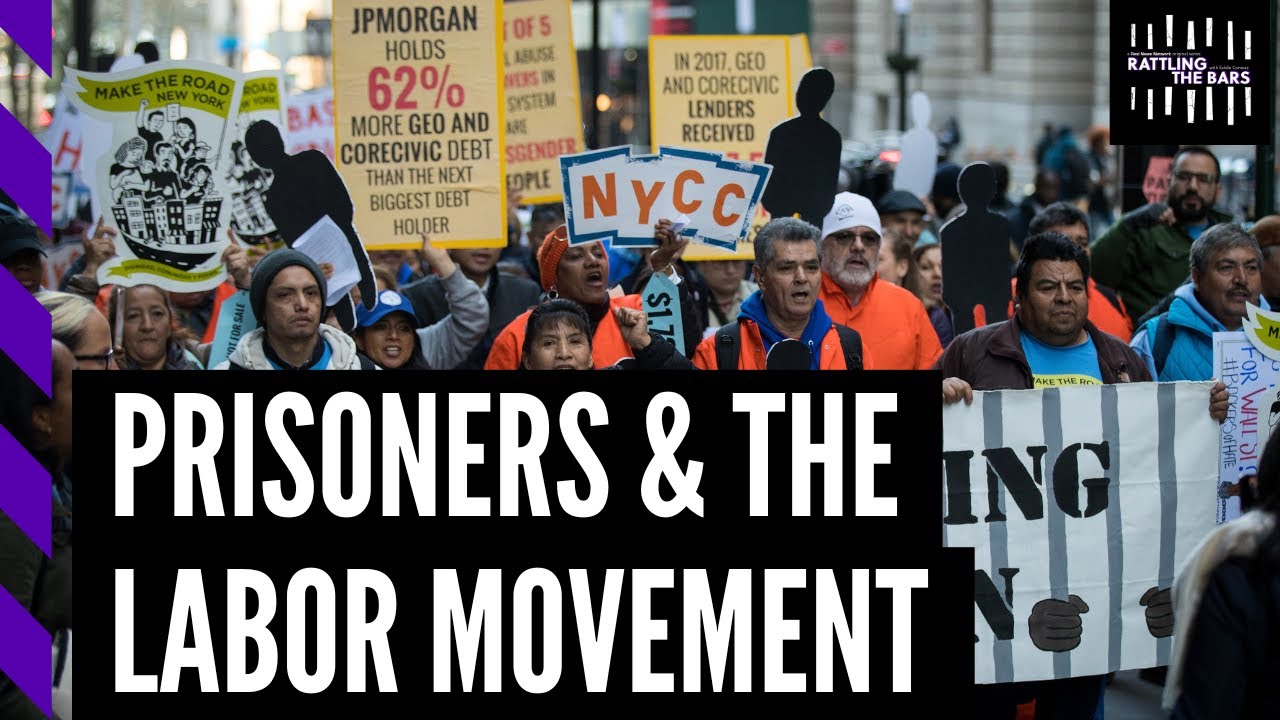
Some unions have joined incarcerated workers and local community partners in demanding justice. Let's all do it.


Certain unions took a huge step yesterday and I hope that more unions and the AFL-CIO will follow their lead and undertake similar initiatives in all 50 states and Washington, D.C.

The AFL-CIO has announced that "(O)n Tuesday, the Retail, Wholesale and Department Store Union-UFCW (RWDSU-UFCW) and the Union of Southern Service Workers (USSW), who are members of SEIU, joined incarcerated workers and local community partners to file a class-action lawsuit in response to the systemic exploitation and forced labor of Alabama’s incarcerated population. The suit, strongly supported by the AFL-CIO, outlines how the Alabama Department of Corrections denies Black Alabamians parole at twice the rate of their White counterparts in order to maintain a cheap labor force through wrongful detention. And though Black Alabamians are only a quarter of the state’s residents, they make up over 50% of the incarcerated population."

The AFL-CIO announcement went on to say that "Alabama Gov. Kay Ivey and state Attorney General Steve Marshall are named as defendants in the lawsuit and are accused of acting as knowing architects of a “modern-day form of slavery” scheme that generates $450 million annually for the state, all on the backs of unpaid incarcerated workers. In a virtual press conference, AFL-CIO Secretary-Treasurer Fred Redmond said, 'Fighting to abolish forced labor is a priority for the AFL-CIO and the American labor movement. And we won’t rest until this corrupt, immoral scheme ends for good.'"

For generations the AFL-CIO and most of mainstream labor has supported the construction of more prisons, even when construction was not viable and exploited prisoners and their families and the communities the prisons were built in. We have tended to look at jails, prisons and other forms of incarceration only through the eyes of corrections and probation officers, construction workers who want the work building prisons and and jails, sometimes as part of our fight against privatization. We have not analyzed or come to grips with some other realities.

The incarcerated are mostly working-class people. Their numbers include many union members who were putting in a full day of work but still living from paycheck to paycheck and trying to get by in a system in which the odds are stacked against them. We have union members who are houseless, members who are veterans who face certain risks that others do not face and a lack of social supports to help them, Black members who are more likely than whites to be singled out for scrutiny and harassment by the police and others, many young members who come from cultures that are at odds with law enforcement, and many members who have been hurt on the job and who have been prescribed painkillers and have become addicted and who self-medicate. All of these union siblings can end up in jails or prisons quite easily.

The numbers of the incarcerated are growing, their plight and the exploitation they experience is getting worse, these are working-class people, there is a disproportionate effect here on communities of color, and mass incarceration and exploitation and racism work against building a strong labor movement.

Many unions have connections to service programs for our union siblings before they end up in jails or prisons or psych wards, and these program do great work, but I am not aware of any unions using our resources to defend or support our members while they are incarcerated or support their families. The question of the civil rights of the incarcerated does not touch our unions in positive ways. We took a big step a few years ago when a few building trades unions began helping some incarcerated union siblings be apprenticeship-ready when leaving prison. For that matter, when we are a part of CTEC and other programs in the schools we are building a school-to-union or school-to-democracy pipeline and not aiding and abetting the school-to-prison pipeline so many young people get stuck in. All of those programs are potentially part of a map for us.

If the announcement above is accurate, and if Labor doesn't drop the ball, a great step is being taken here, and one that we should build on and link to our good programs that help some of the incarcerated enter apprenticeships and that aid our members before they end up in the prison pipeline. We need one unified approach that helps everyone more forward.


Image taken from a report by Mansa Musa that appeared on The Real News


(These are not the opinions of the Marion-Polk-Yamhill Central Labor Chapter or the Oregon AFL-CIO.)

Friday, December 1, 2023

On this date in working-class history: Rosa Parks was arrested for refusing to move from a "whites-only" bus seat in Montgomery, AL.


The graphic above comes from Shondaland and accompanies the article "Rosa Parks Was My Aunt. It's Time to Set the Record Straight" by Urana McCauley as told to Liz Dwyer. That post was put up on February 4, 2019. It is a good introduction to Rosa Parks and the events of December 1, 1955.

And don't forget this...

The Neville Brothers - Sister Rosa